Fly Fishing Basics: How to Get Started Without Getting Frustrated
Fly fishing is genuinely more technically demanding than spin fishing, and beginning fly fishers who attempt to learn entirely from YouTube videos and independent field practice frequently develop casting habits that limit their fishing effectiveness for years. The investment in a two-hour casting lesson with a certified casting instructor (CCI) from the Federation of Fly Fishers typically costs $75 to $150 and prevents the months of confusion and frustration that independent learning produces for most beginners. This is not an upsell — it is the single most cost-effective investment available in the fly fishing learning journey.
Understanding Fly Casting: The Weight Is in the Line
Fly casting is fundamentally different from spin casting in the mechanical principle at work. In spin fishing, the weight of the lure loads the rod and carries the line. In fly fishing, the weight of the fly line itself loads the rod and delivers the nearly weightless fly. This means the casting stroke must work with the weight of the line in the air — the stop-and-wait principle of fly casting where the forward cast begins after the back cast has fully loaded the rod through line weight. Attempting to cast a fly rod with the same continuous motion used in spin casting produces a tangle because the line never loads the rod correctly.
The Basic Overhead Cast
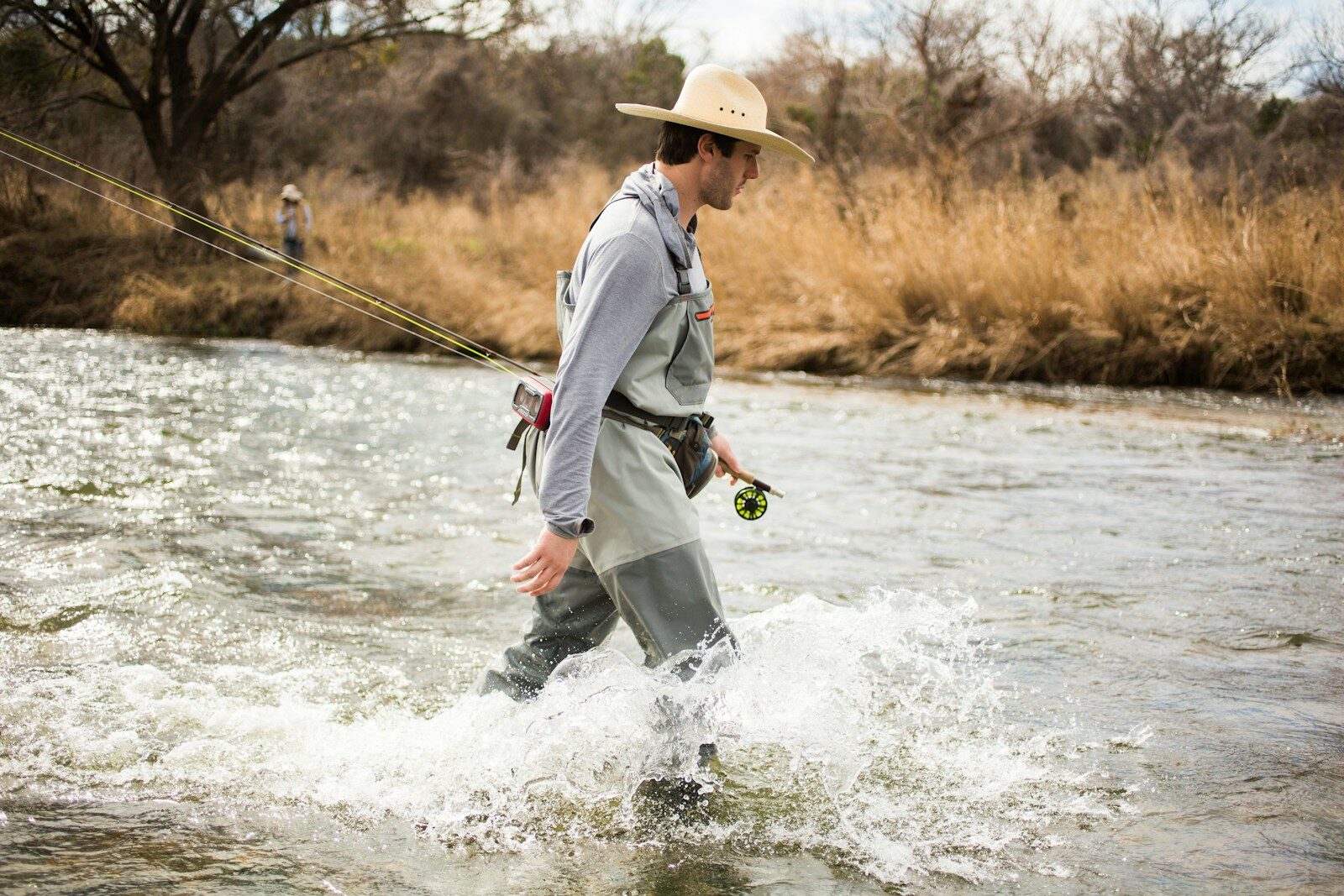
Pick up from the water with a smooth, accelerating stroke that ends with an abrupt stop at approximately 10 o’clock. Wait for the line to straighten behind you — this is the pause that beginners most consistently rush, causing tangles and poor forward presentation. Make the forward cast with an accelerating stroke that ends with an abrupt stop at approximately 2 o’clock. Let the line fall to the water in a gentle curve. The rhythm is accelerate-stop-pause-accelerate-stop. Practice on grass before approaching water — you can see exactly what the line is doing and make adjustments without the distraction of fish.